Climate change must not disrupt business as usual
Don't believe the hype - we are still firmly on course towards climate catastrophe

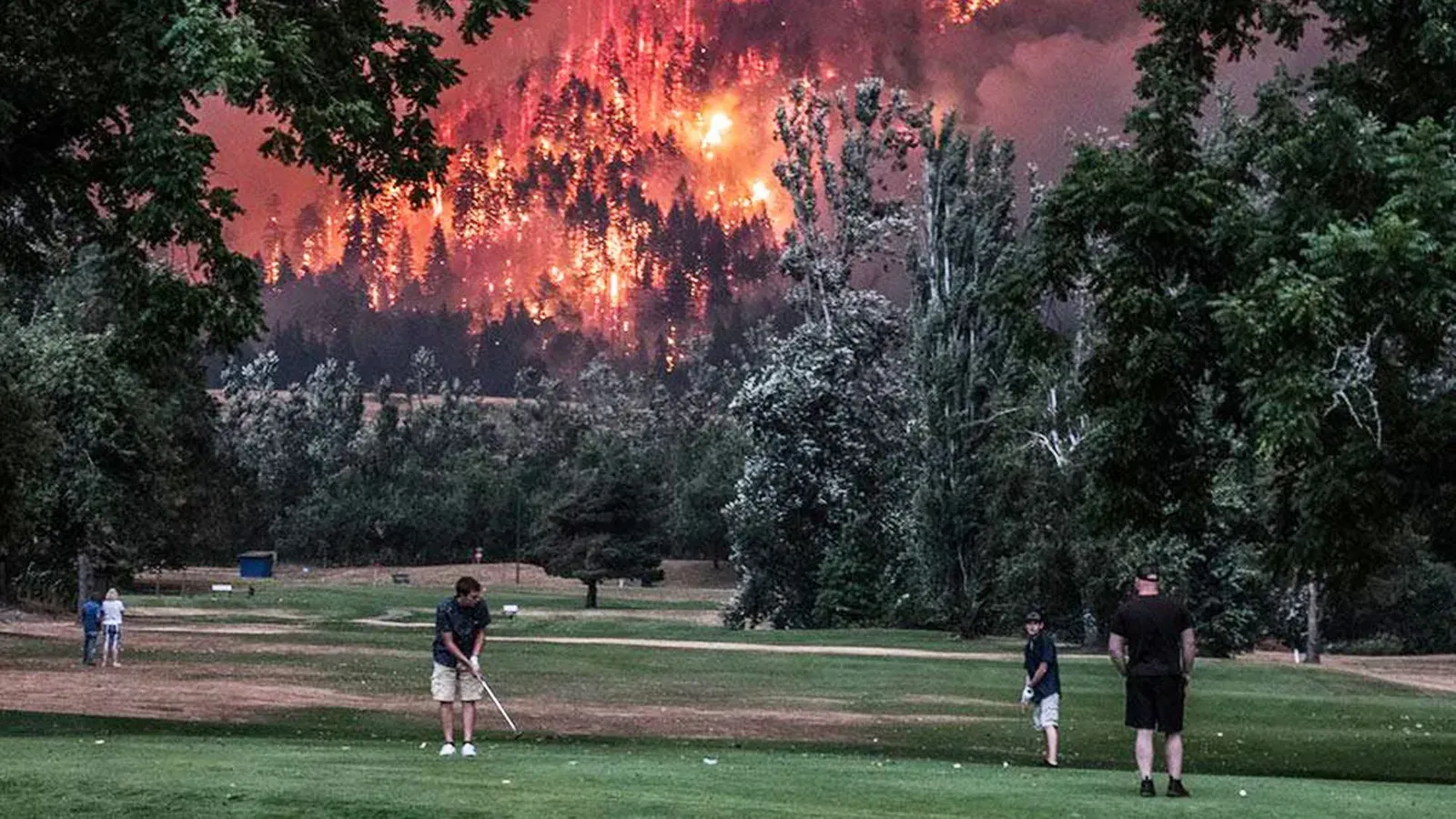
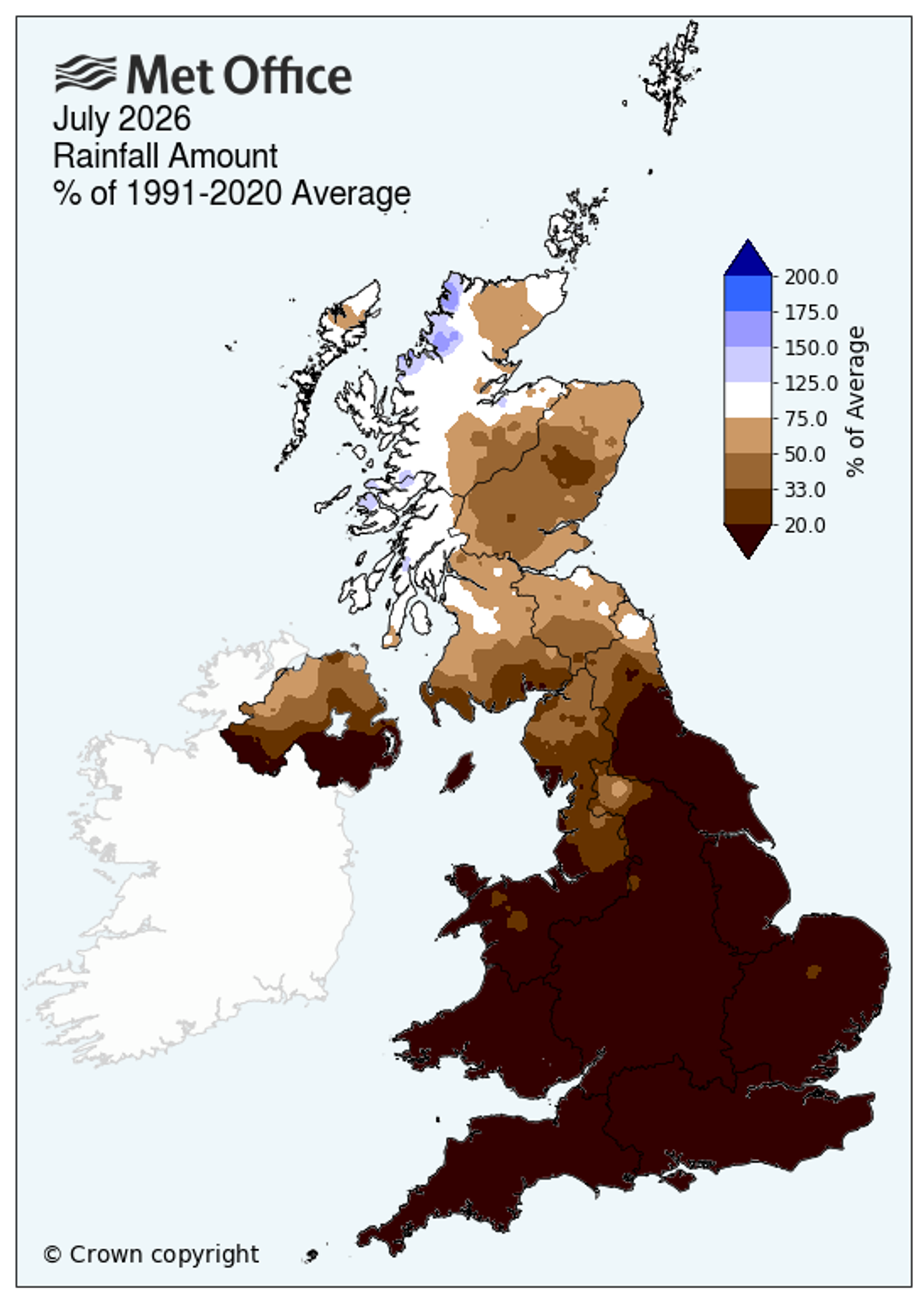
As I write, vast regions of Europe are on fire as heatwave after heatwave pummels the continent. The UK has just experienced its driest July ever. Not a drop of rain has fallen in London for over a month.
The situation is so bad that even the otherwise reliably climate-denying Telegraph has published articles that say climate change is real and humans are to blame. Previously, sea level rise inundating small island nations and crop failures in sub-Saharan Africa would barely merit a shrug from this right wing publication. Perhaps seeing Bordeaux’s vineyards go up in smoke was for them the moment when climate change got real. Pray mercy for Merlot, and think of the Chablis – something must be done!
Namely, the rapid phase out fossil fuels, while also making herculean efforts to adapt societies to the hotter and more dangerous world we are entering. This adaptation needs to go well beyond sea walls and AC. I am becoming increasingly concerned that what we regard as tipping points may actually be fracture points; the point at which key institutions and systems break from intense and cumulative stress. It’s this failure of social systems that concerns me just as much as Earth system collapse. They have the potential to amplify initial climate shocks via negative social tipping points. At systemic levels this has the potential to lead to what we call derailment risks – efforts to stop future heating are degraded because of lack of institutional capacity given increasing social, political, and economic disruption. Derailment risks are one of the reasons I am so baffled as to how proponents of solar geoengineering can blithely claim that future societies will be able to continue to operate planetary-scale cooling operations for centuries – but more on that in the future.
I am more than baffled at what some sections of the climate science community have been doing in the midst of this crisis. Over the past few years we have seen the quite astonishing spectacle of this community tying itself up in knots trying to decide what constitutes a worst case scenario when it comes to future heating. Essentially what happened was that the one of the future climate scenarios SSP (Shared Socio-economic Pathways) that modelled large future greenhouse gas emissions and high warming was deemed to be no longer needed for future rounds of climate science and policy work. Why? Because this particular SSP (SSP5-8.5) assumed a number of things that were no longer plausible such as continued increases in burning coal.
Some people got their knickers in a twist about this, arguing that SSP5-8.5 was mistakenly called "business as usual" and so miss-represented the actual energy transition that was happening. The good news is that we may have reached peak coal - the point at which global coal use no longer increases. Part of the reason for this is the extraordinarily rapid deployment of renewable energy such as solar. So, does that mean we have avoided catastrophic warming by the end of this century?
No we have not! The assumptions that these different SSP use should feed forward into Earth system models that then produce simulations for future warming under these different pathways. So while emissions in the future may not be as high, this does not mean we can assume that 4°C or even 5°C of warming has now been avoided. That’s because we still do not fully understand how sensitive the Earth system is to human impacts. I cannot stress this enough. There is still significant and stubborn uncertainty when it comes to climate sensitivity. We could end up with 4°C even if we're to limit emissions at a level that our central estimates tell us we should expect 3°C. What's more, our assessment of what constitutes dangerous climate change has itself changed. 1.5°C of warming is not safe.
We have limited understanding of how land-based carbon sinks such as forests will respond to future warming. We do know that some of these have the potential to flip from sink to source and so further contribute to warming. There is significant uncertainty as to what amount of warming that will happen under. If deforestation continues in the Amazon, then 1.5°C of warming may be sufficient to tip it. Some systems may have already passed their tipping points. And all of this is happening within the context of all-time highs in global average temperatures and greenhouse gas emissions.
There are already indications that the Earth system is losing resilience, losing its ability to buffer human impacts. The rate of warming has nearly doubled over the past decade. The loss of Earth system resilience has the potential to increase this further. On top of this, a truly enormous El Nino is emerging. The discharge of a vast pulse of heat into the atmosphere from the oceans has the potential to not just stress food, water, and energy systems but crush them. Along the way it will smash temperature records: this year is likely to be second warmest ever, while 2027 could be up to 1.7°C above pre-industrial levels.
The new set of climate scenarios have caught up with some of this reality in that none limit warming to no more than 1.5°C. That North Star is setting. But wait – it can return! If we assume vast amounts of carbon dioxide removal then we can drag temperature increases back down to 1.5°C by the end of the century. If you believe that, then I have a data centre in space to sell you.
So it seems a strange time to say that we have avoided catastrophe and that the very high warming scenario is no longer needed. Entirely predictably this was touted by fossil fuel interests and assorted climate change deniers as scientists saying that there is no need to rapidly phase out fossil fuels. Even President Trump chipped in. I am sure many people will see this for the utterly craven behaviour that it is, but how this has been handled and communicated by the climate science community is maddening. So what should be the message?
You often hear: another world is possible. Well I am here telling you that another world is inevitable. We either decide to stop burning fossil fuels or the Earth system will stop us. We are well beyond incremental, so-called policy relevant pathways. Think wartime mobilisation, and the command of entire economies. None of the climate scenarios capture this. They are all constrained by what politicians would find palatable, which ultimately is whatever maintains economic growth. This means it is still very much business as usual when it comes to our reckless meddling with the Earth's climate.