The worse climate change gets, the harder it becomes to stop it
It reasonable to assume that a deepening climate crisis will focus minds and spur climate action. Unfortunately, the exact opposite may happen.

This year may be seen as a turning point in the climate crisis. The UN has accepted that global warming is going to exceed 1.5°C, while climate scientists concluded that the rate of warming has effectively doubled over the past decade. What's worse, the world may be approaching climate tipping points that could trigger further heating and catastrophic environmental change.
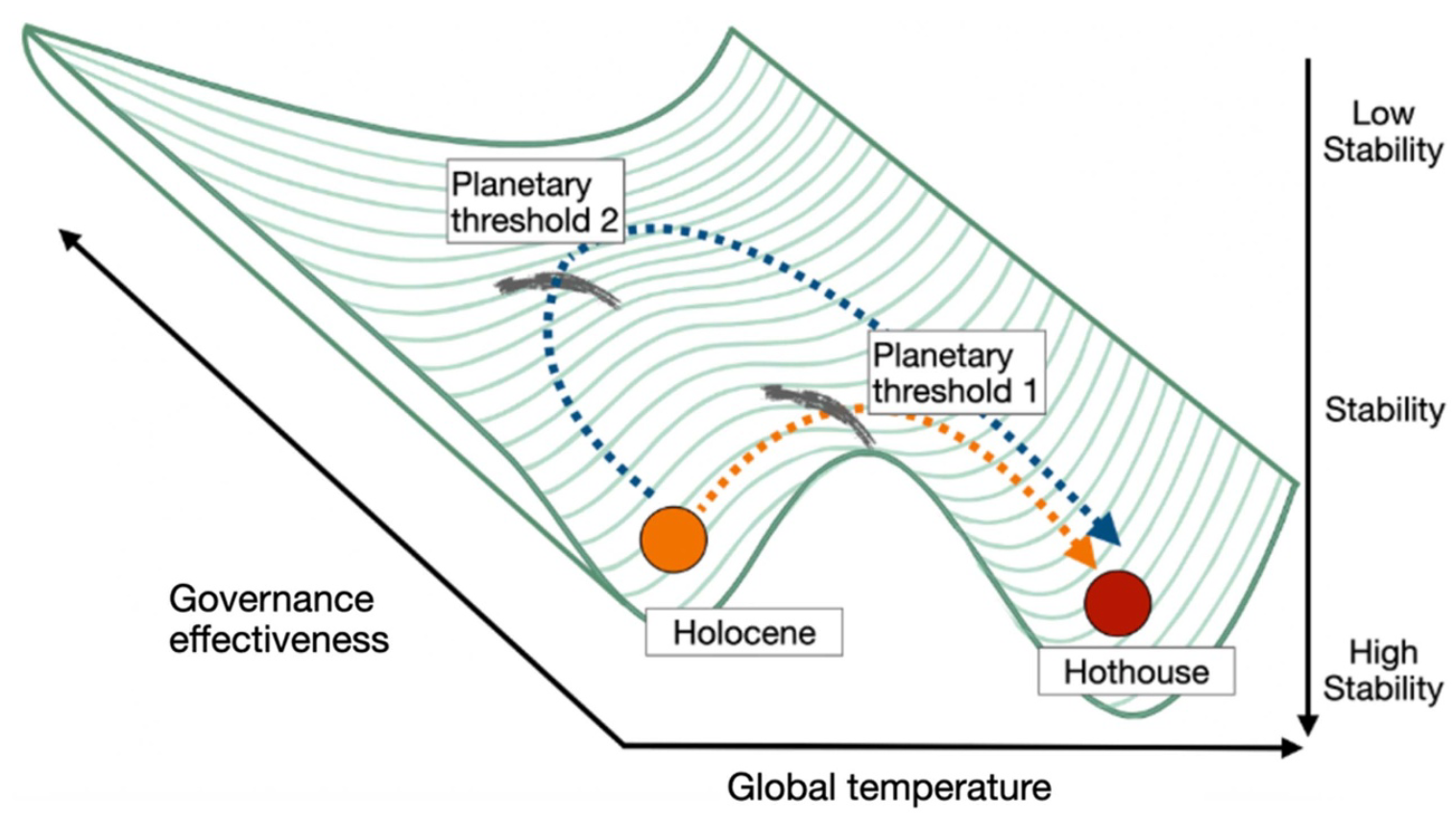
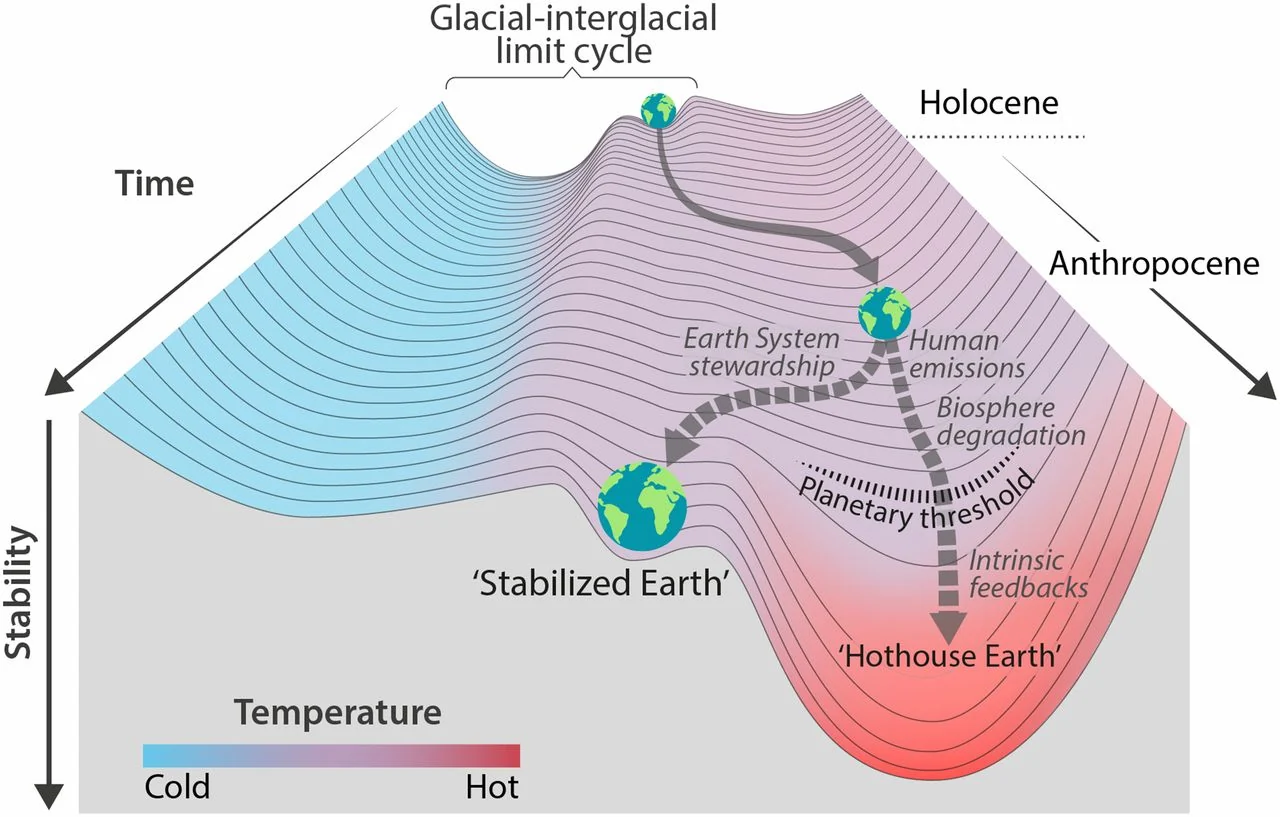
Back in 2018, an international team led by Earth system scientist Will Steffen warned that continued greenhouse gas emissions and destruction of biodiversity could produce a cascade of warming that would culminate in the climate systems passing a threshold into a so-called "Hothouse Earth".
The engine of this cascade would be individual tipping points in the climate. For example, the shutdown of certain Atlantic Ocean currents would not just plunge Europe into freezing winters, but could significantly starve the Amazon rainforest of water vapour. A drought that turns the Amazon to savanna would have huge consequences for the global carbon cycle and climate system. Further warming would accelerate ice sheet loss and ramp up temperatures.
As various tipping points are passed, the Earth system reaches a threshold that could produce a rise in temperatures greater than any for the past 1.2 million years. This would have devastating impacts on ecosystems and societies. Indeed, it’s hard to see how complex, industrialised civilisation would be able to exist in a world that has rapidly warmed beyond 4°C.
Are we responding to the risks?
To what extent the Earth system has the capacity to produce this sort of cascading warming is a topic of intense scientific research. We may be lucky, in that individual tipping elements such as Atlantic current collapse require much higher levels of warming, or more fundamentally the Earth’s current climate may prove to be more resilient than we think. Unfortunately, the opposite may be the case and a planetary threshold may lurk at lower levels of warming than Steffen and colleagues proposed.
It seems reasonable to assume that a deepening climate crisis will focus minds and spur climate action. Unfortunately, new research by my coauthors and I suggests the exact opposite may happen: the worse climate change gets, the harder it could be to stop it. The end point of that process is a disastrous acceleration towards further warming.
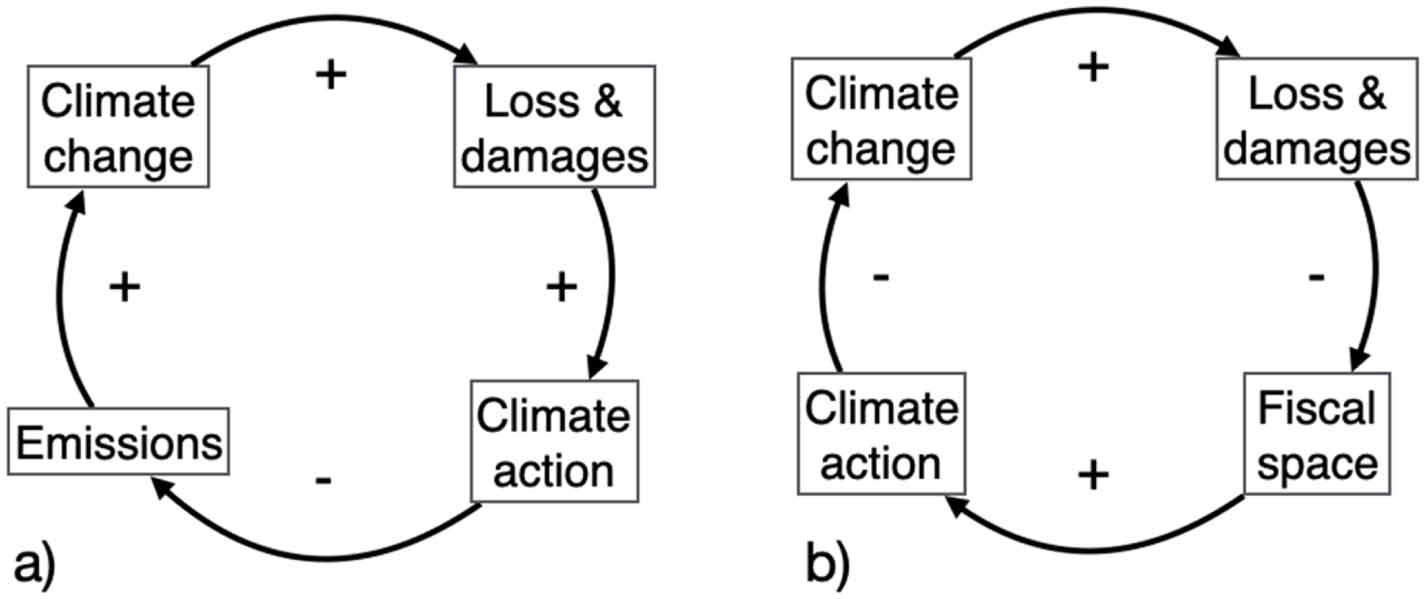
Rather than being a purely theoretical exercise, we propose that we can begin to see signs of this slide away from climate action in the real world. For example, those nations most at risk from climate change can be caught in a sovereign debt "doom loop" whereby the damage caused by extreme weather reduces their abilities to repay loans and makes it harder to obtain desperately needed finance to both mitigate and adapt to climate change. This feedback loop can derail climate policy over time: as debt servicing consumes growing shares of government revenue, climate investments are sidelined, and the country becomes increasingly exposed to climate change.
Increased warming can also increase conflict, thus undermining international cooperation required for mitigation. This is affected by a range of socioeconomic factors, such as inequality and political polarisation. For example, see the increase in popularity of far right wing and climate denying Vox party in Spain following the devastating Valencia floods of 2024. While the floods were made much more likely because of human-caused climate change, Vox argued that it was left wing "ideological" environmental policies that made people more vulnerable to the intense rainfall.
The name we give to these dynamics is "derailment risk", the situation where the consequences of climate change makes it harder to deal with the drivers of climate change, and so sustainability efforts end up being derailed.
Planetary stewardship
Given the potentially devastating consequences of a Hothouse Earth, it seems sensible to minimise the chances of it happening as much as possible. To that end, climate and Earth system scientists have argued that active management of this risk is required. This "planetary stewardship" goes beyond phasing out the burning of fossil fuels to include strengthening forests, peatlands and other natural stores of carbon, along with behavioural changes, technological innovations, new ways of governing, and transforming social values. But derailment risks could undermine the political and social conditions needed to establish any sort of planetary stewardship.
A key concept here is agency – the capacity to produce change. In the original hothouse framework, agency is essentially one way. Humans affect the Earth system by destabilising it. But humans are not simply an external force acting on the Earth system: we are part of it, and our social and political forces can influence its stability and whether the planet slides into a hothouse state.
We argue that the feedback loops pulling us towards derailment can be stronger than those needed to establish planetary stewardship. That's because collective action can be easier to destroy than build. At a psychological level, bad events affect people more strongly than good events. This is a factor in how trust within a society can be much easier to undermine than create. Increasing climate change impacts could therefore erode the social institutions needed to sustain effective mitigation and adaptation, just when they are most needed.
To respond to this risk we propose a three stage framework for assessing and managing derailment threats. First, identify and map feedback loops between the human and natural world; second, anticipate disruption and build resilience; third, develop active responsive governance strategies for periods of escalating instability. This work is urgently needed now. We must have in place the scaffolding to support the institutions that adaptation and mitigation requires - not to mention the mechanisms to pay for climate loss and damages which are going to increase.
Humans are entirely responsible for the climate and ecological crisis, but we also hold the solutions. Maintaining our agency – the ability to put solutions into practice – may prove to be the keystone for all climate policies.
A version of this article was published in The Conversation.
Open access article Manage derailment risks to avoid Hothouse Earth.