From tipping points to fracture points
We are entering an age of climate overshoot. The world will become increasingly turbulent and dangerous. Cracks will form across social systems. Our job is to prevent them from becoming fractures.

I’ve been in London for London Climate Action Week and it’s hot. The UK saw is highest ever June temperature on Wednesday, breaking a record set in the historic heatwave of 1976. On Monday I speculated that some events would be cancelled because of the extreme heat. On Tuesday a workshop at LSE was indeed cancelled because the venue did not have air conditioning and it was sweltering inside. Irony itself is being fried because the workshop was about the need to adapt to extreme heat.
The climate aircon feedback loop worries me. Regular heatwaves will lead to more aircon installations in offices and homes. This increases electricity demand which puts further stresses on a grid that is needing to deliver much more power by, for example, electrifying transport. Peak demand will come at times of peak temperature when grid failures would have the greatest consequences. Today this almost feels like a nice problem to have. The UK is far behind what it needs to do to adapt and so the danger is not too much aircon but not enough adaptation to very high temperatures.
There are other ways to combat the heat. Social media is full of posts of people putting insulating foil over windows, using awnings and umbrellas to try to keep cool. But if you have to work outside, take the Tube, or try to sleep in a south facing terrace house, then it’s extraordinarily grim. Worse if you are very young or old, or have underlying health conditions. During the 2025 European heatwave 16,500 people died prematurely because of the extreme heat. I sometimes try to simplify the climate crisis with: the more fossil fuels we burn, the more people will suffer and die. But even that doesn’t capture what is at stake here. Because that could suggest a gradual increases, a smooth transition into a more dangerous world.
The notion of tipping points is relevant here. Tipping point science has concluded that irreversible and sudden changes to elements of the climate may result from our continual emissions of greenhouse gasses. The metaphor of tipping back on a chair until stability is so eroded that you fall backwards is a powerful one. But even this misses what may well prove to be just as important changes in human societies.
My colleague and good friend Tim Lenton has been one of the leading figures in developing tipping point science, and more recently social tipping points. Tim’s motivation was to see if insights into the sort of non-linear dynamics that threaten to produce dangerous environmental change could be applied to social systems such that we can intervene in them in ways to accelerate sustainability transitions. There is a great deal of interest from well beyond academia as to how to apply tipping point theory to sustainability. I have become interested in tipping points too, but their ‘evil twin’, so-called negative social tipping points. A few years back Viktoria Spaiser led a team to explore how initial climate impacts could be amplified by social networks and dynamics. For example, climate-driven extreme weather could destabilise societies and empower populist climate denying political parties. I’ve been looking at these sort of reinforcing destabilising feedback loops with Laurie Laybourn – something we call derailment risks because they have the potential to degrade our ability to deal with the drivers and consequences of climate change. This risks reducing societies’ ability to affect positive change which leads to even worse impacts in the future. The sustainability transition could be entirely derailed.
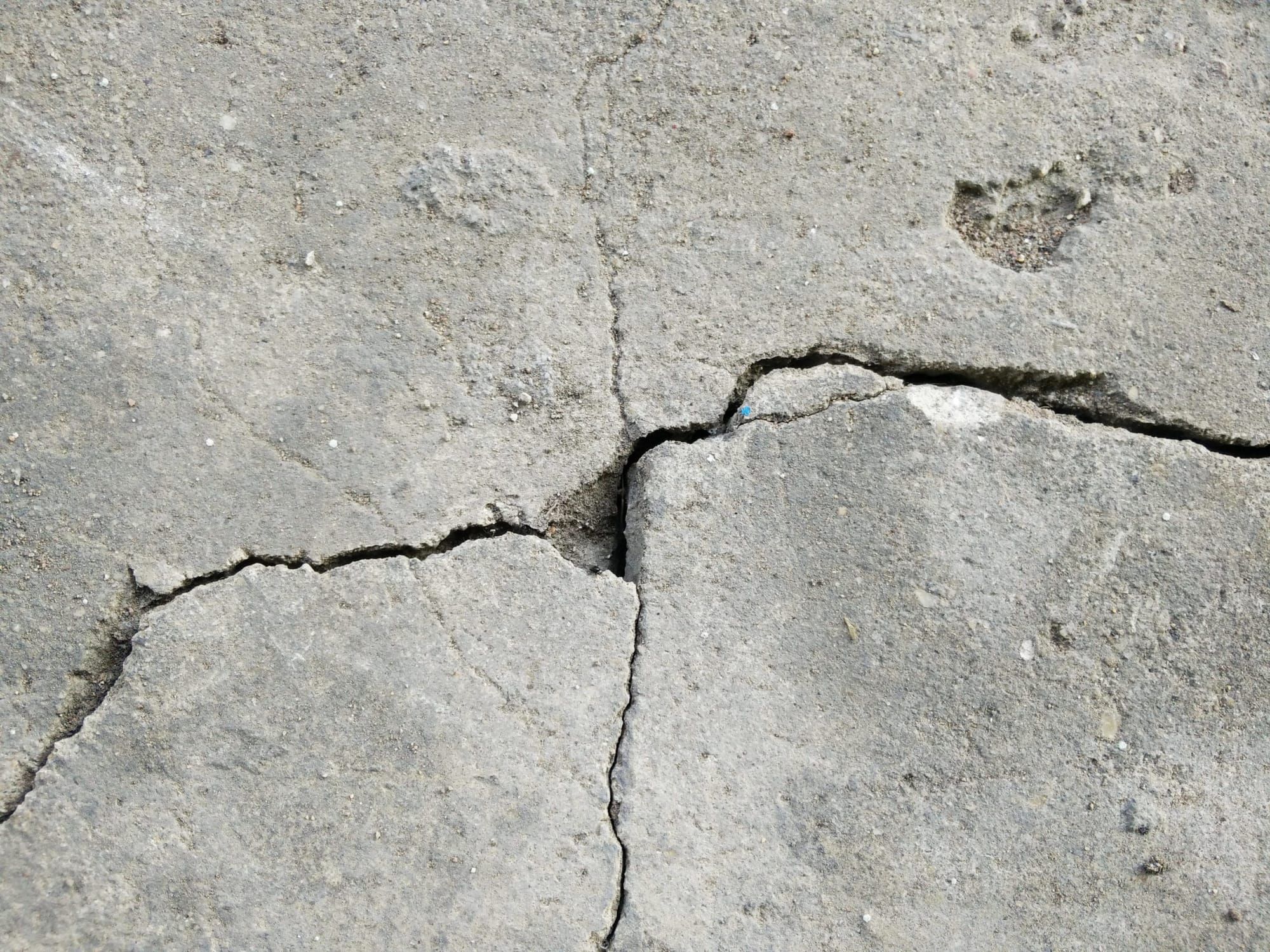
These reinforcing dynamics lead me to speculate about how tipping points could produce ‘fracture points’. Global heating will progressively stress societies until something breaks. Fracture points seems an apt metaphor because a physical material can deform under a certain amount of stress until it fails. It then behaves entirely differently. What was previously a bridge becomes two lengths of metal and concrete resting in a river. Similarly, social systems will be able to respond to a certain amount of heating until they fail. For example, El Nino is emerging and it looks like being a monster. This will drive extremes in temperature and precipitation globally. Crop yields already being affected could be hammered. In a response to attempt to ensure food security, nations will implement export controls, prices rocket, social unrest erupts.
Thus far these sorts of outcomes could be explored via concepts such as the polycrisis. Fracture points tries to capture the failure of systems. The paradigmatic example of a fracture point would be state failure – the collapse of the governing institutions of the modern nation state. But there are myriad other potential fracture points within the highly connected flows of energy, materials, information, finance, and people that constitutes our global civilisation. Adaptation will become key not only to reduce some of the suffering warming will produce, but also because this can increase the resilience of the institutions and other social systems that underpin a safe and just transition into a post-carbon world.
We are entering an age of climate overshoot. The world will become increasingly turbulent and dangerous. Cracks will form across social systems. Our job is to prevent them from becoming fractures.
Fracture prevention progressed via mitigation and adaption will be key.