Don’t fly me to the moon
Why NASA’s record breaking lunar mission left me strangely unmoved

I have two life-sized cardboard cutout figures in my office - I need to remember to move them out of shot when I join video calls. To the left of my bookcase stands Darth Vader. On the other side is Buzz Aldrin. If you have any interest in spaceflight, then you will know this image very well. It was taken on the 20th July 1969. The person behind the camera (and reflected in the visor) is Apollo 11 Commander and first human being to set foot on another celestial body - Neil Armstrong. If people ask, I use both cardboard cutout figures when giving school talks about Earth and climate science. The truth is, I just like having them around.
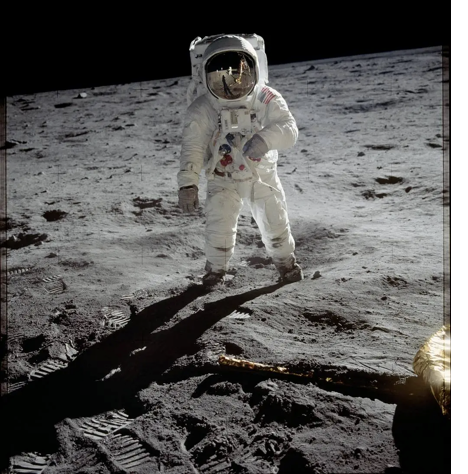
For me, Star Wars was a major cultural event. For most of my childhood I had the Buzz Aldrin photo on my bedroom wall. A bedroom that had planes and rockets suspended from the ceiling on bits of string. I was a massive space and science fiction nerd. But growing up, I had this sense of missing out on the golden age of spaceflight because I was born just as it was ending.
I was eleven months old when the last mission to the moon – Apollo 17 – launched on 7th December 1972. Commander Gene Cernan and Lunar Module Pilot Harrison Schmitt lived on the Moon’s surface for three days. Cernan’s footprints at the base of the lunar lander ladder were the very last made by a human being. For almost my entire life I have been waiting for people to return to the Moon.
That’s not to say there have been no major developments since. When I was nine years old my science teacher rolled the TV trolley into the classroom during lunchtime on the 12th April 1981, and we gathered round to watch the launch of the first Space Shuttle which started the STS - Space Transportation System – programme. Over the years I watched the build of the International Space Station. Now we take it for granted that humans are continually in orbit 250 miles above the Earth. While that sounds very high, this is actually considered a low Earth orbit. Since 1972 no human has gone higher.
Which is why NASA’s Artemis II mission is such a big deal. For the first time in 53 years people left the Earth and travelled to the far side of the Moon. In fact, given the mission profile, the four Artemis astronauts ventured further from the Earth than anyone ever before - 252,756 miles. They are due to splash down in the Pacific later today, and if things go well in a few years I may see someone reproduce Armstrong's giant leap.
I watched the Artemis II launch on the 1st April and was planning on following the various stages of the mission via NASA’s excellent livestream broadcasts. But in the end I found myself feeling strangely unmoved and I never tuned back in. I was looking forward to something, and when it arrived I realised I had changed. And so had the Earth.
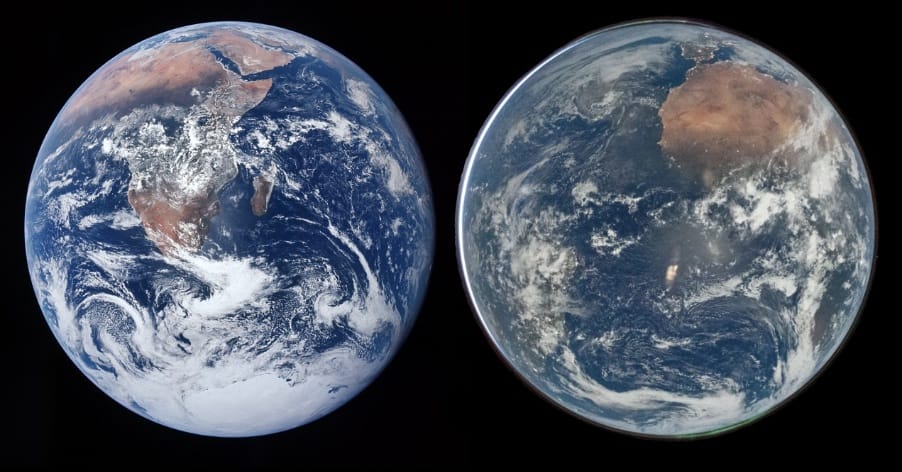
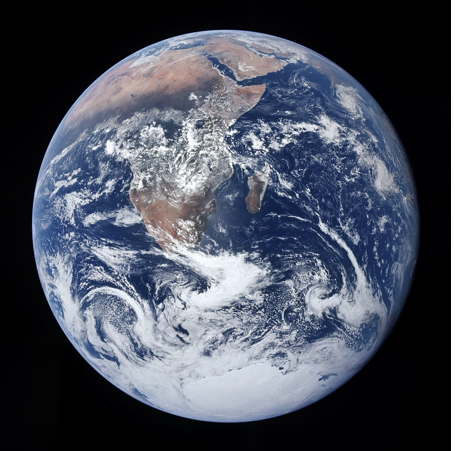
The Blue Marble image of the Earth is one of the most reproduced photographs of all time. It was taken by the crew of Apollo 17 as they left the Earth on their way to the moon for that final mission. I grew up with this image, and have always been grateful that I was able to live with this view of our home planet. It still moves me. The Earth is so beautiful, the green and browns, the hues of blue, the complex swirls of white. And if you look closely, the thin film of the atmosphere that divides the zone within which everything that has ever lived, with the vast and sterile vacuum of space. The Artemis II crew reproduced the image this month as they were speeding away from Earth. From space the Earth looks much the same, but today were are looking at a planet that has profoundly changed.
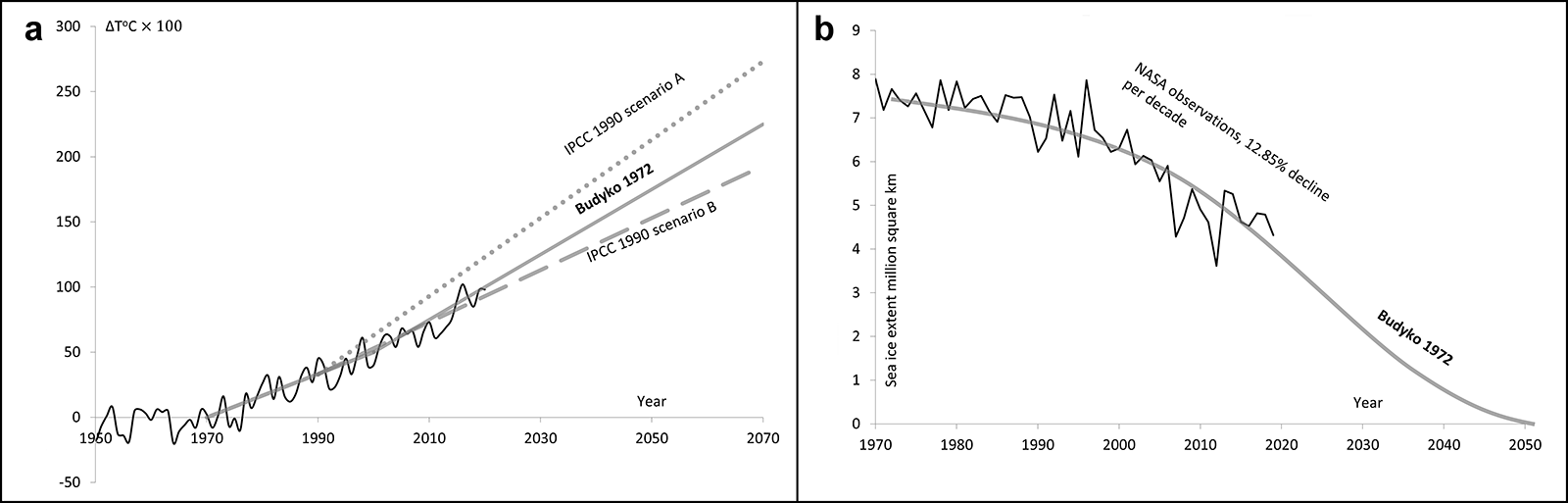
Since 1972, the burning of fossil fuels has released over two trillion tons of carbon dioxide into the Earth’s atmosphere. This is trapping more heat, and temperatures on land, air and sea surface are rising. In important respects this is entirely unsurprising. 1972 was an important year not just for spaceflight but climate science because 1972 was when Soviet climate scientist Mikhail Ivanovich Budyko produced a prediction of climate change for the next 100 years. It has proved to be remarkably prescient. Comparing 2020 to 1970, Budyko predicted an increase in the global mean temperature of around 1°C and a halving of Arctic multiyear sea ice. You can see just how accurate he was.
Humans are also responsible for other profound changes to the Earth. The average size of wild animal populations has collapsed by more the 73% in the last 50 years. Vast swathes of rainforests and other ecosystems have been destroyed. The oceans are been emptied of life. Microplastics riddle the environment and our bodies, along with a myriad of other ‘forever chemicals. One of the jewels of the Earth’s biosphere, warm water coral reefs, are being exterminated.
Reflecting on his experiences of travelling around the Moon in 1968, Apollo 8 astronaut Bill Anders said “We came all this way to explore the Moon, and the most important thing is that we discovered the Earth.” Today we are repeating this voyage of discovery at a time when it has become painfully clear that we failed to learn any lessons from the first one. So as wonderful as the images produced by Artemis II are, as inspiring it is to witness humans one again venture into deep space, I cannot separate this from what have done in the intervening decades – and what we continue to knowingly do to our home planet.
I remain a space nerd and believe that our future may be one day to play among the stars. But if this were to come with the cost of the Earth, then it would stand as humanity's greatest tragedy.